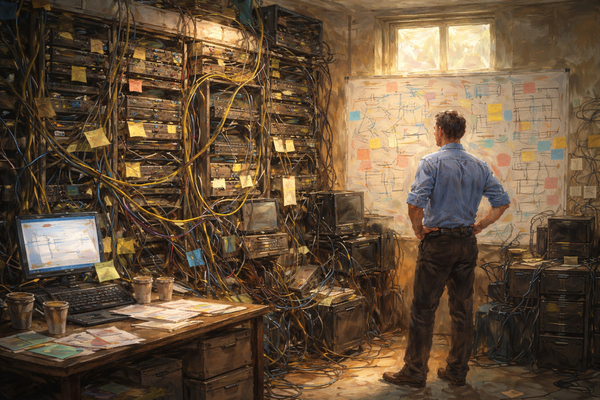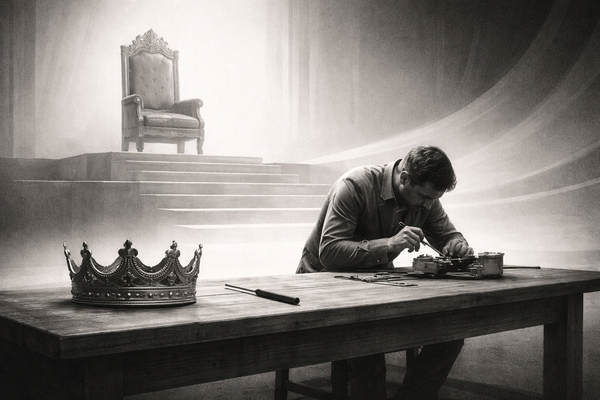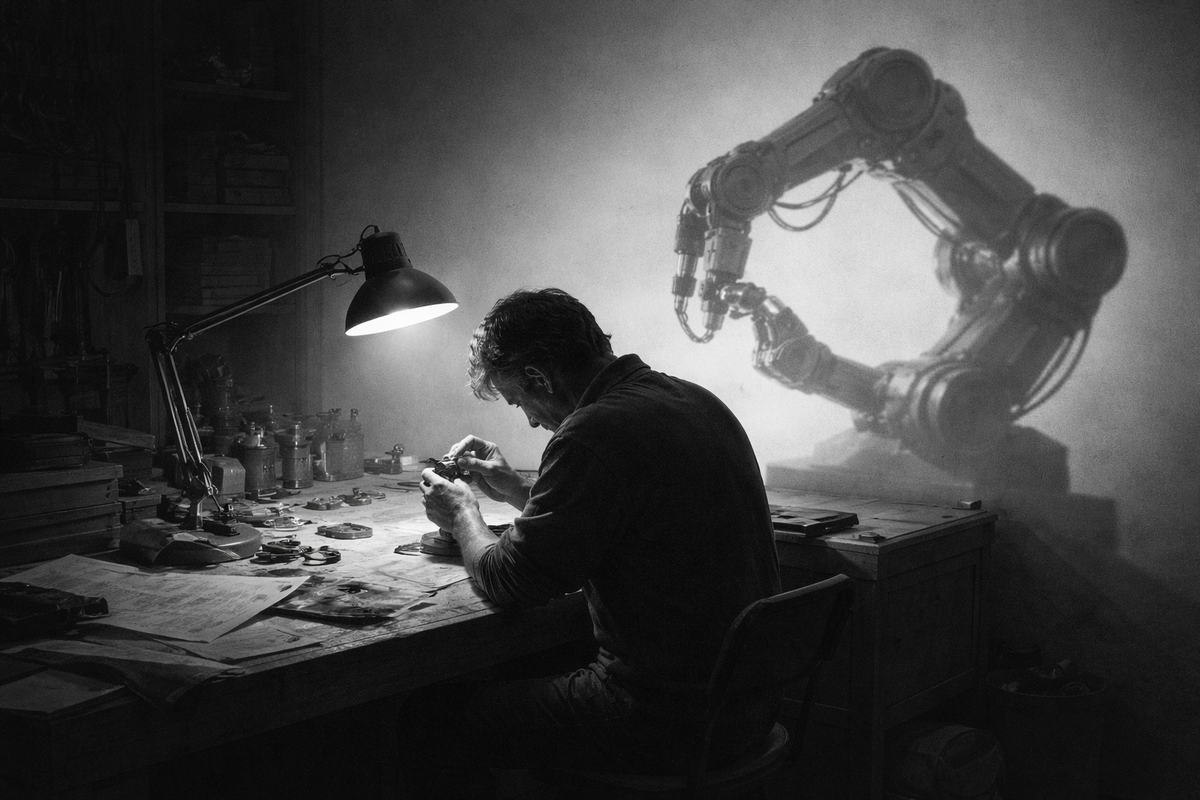
Users resist. But why?
Let’s get past the obvious push-backs – both the unspoken and the vocal – to save one’s own job. That is understandable. But there is another. There is a pushback that comes not from fear of relevance but lack of trust in AI’s ability to do the job.
For those with the vested interest – the companies that want to embrace AI and the ones that sell AI solutions – the resistance may seem antidiluvian. We tend to lump all resistance as resistance to change, as though AI is unmistakably perfect.
I will give you examples.
We are studying the equipment leasing market. Someone I know sells AI to lenders. The parallels are just the same. We want to sell the best underwriting software that looks at two dozen variables and predicts asset value or the quality of the leasee.
For someone who has looked at equipment of all shapes and sizes all-day long for 20 years, it is unrealistic that AI can figure the asset’s residual value all by itself. At the simpler end, an underwriter pulls data from auction sheets, economic outlook data from internal economist’s reports, price benchmark sheets that come out annually, and 5 more sources that I cannot remember. What happens when they transpose the data into their underwriting sheet by hand is, every cell’s input is checked against a pattern stored in memory.
“Huh! That’s a 2022 Merlo ROTO 50.26 S Plus Telehandler which means US EPA Label maybe absent”.
There is a mental note, a verification, and a discount math all going on with just the title of the asset they are looking to underwrite. In each subsequent step, as they copy over the data, they are finding something that matches the pattern they know or stands out. Anything that stands out, gets scrutinized, not when they sit to run the model but as they put the data in.
An AI underwriter can harmonize and assemble the data in 2 minutes instead of 45 minutes. It can do a dozen pattern-matches and keep track of all variables that may affect the residual value of that asset.
Humans call something an art when it is hard to reproduce without an individual’s practice and skill. If it can be mass-reproduced it is a production act and not an art. Underwriting an asset today is art. How do I know what politics, tariff, oil prices, and weather’s impact on next season’s crops would do to the price of an asset in the secondary market? I don’t. So I will apply my mastery and artfully arrive at a price.
AI can do a better job, for sure. But the place to start isn’t one of confrontation. You cannot ask an underwriter to move aside from their ritual without proving that AI can do better. But to prove that you can do better, you need to be on the driver’s seat, right?The way to bring about change is to not ham fist your way into the heart of the problem, but enable the underwriter to perform the art. Pull data from different sources, fix the label problems, assemble the data into their spreadsheet format, open one new easter egg every few days, and make them realize that AI has made them focus on the art and not hand-copy the notations into a new sheet, the night before the performance.
For every organization there is a coveted prize; the place where AI will open the floodgates of accuracy and scale of action. The path to that prize is not cleared by a bulldozer driven by the C-suite but a bicycle for the performer’s mind.
Resist selling AI as the humanoid. It's tempting. What will get accepted is a power drill.